Watering, Weeding & Winter Protection
Watering:
Watering is the single most important thing you have to do to help your new plants thrive. There is no set number of times per week that you should water – you have to pay attention to the weather: the temperature, the winds, the precipitation – and adjust your watering accordingly.
Tools: Invest in decent hoses and sprinklers. If you’ve just spent a few thousand on a new design and plants, don’t skimp on the ONE TOOL you need to keep those plants fed. A good hose can cost around $50 and a good sprinkler $30-$50 and a watering wand for hand watering is about $25.
Weeding:
I define weeds as any unwanted plant that has self-seeded in the garden. The goal of a weed is to out-compete any and all plants in the garden. They compete for water, nutrients, sunlight and space. Weeds tend to be excellent at this competition. They are bullies. Your job is to protect your newly purchased plants from them. If you let the weeds get out of control, they will lessen the chances for the new plants to grow and thrive by sucking up their water, eating their food, shading out their sunlight and elbowing them out of their space.
You should commit an hour or so each week to a quick weeding. It is best, if your time is tight, to just yank up weeds as you are walking by and lay them in the sun to dry out. Don’t let them grow unchecked until you have a full day’s work on your hands.
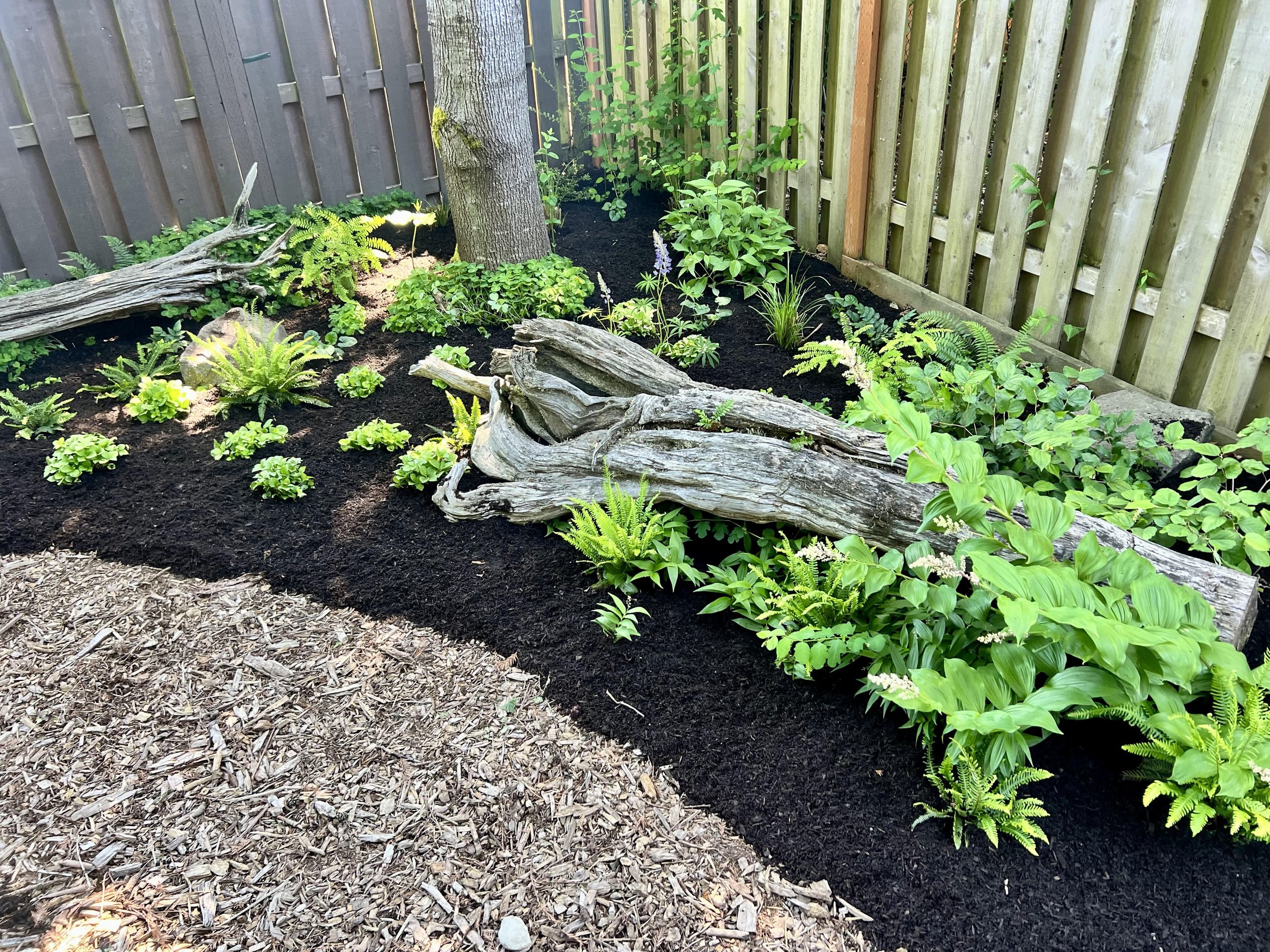
I try to select plants that will “knit” and form a carpet that eventually discourages weed growth. During the first 2-3 years you will have to help them out by keeping the weeds at bay. I also mulch the finished beds with 3-4” of compost that keeps recently released weed seeds from germinating. Any weeds that do germinate should be easy to pull out of the loose compost.
Winter Protection:
Newly planted gardens can benefit from winter protection.
- Water your new plants up until November, when the ground freezes.
- Wet soil doesn’t get as cold as dry soil and takes longer to freeze.
- Evergreens must go into winter hydrated as they keep their leaves or needles all winter. Take special care to water them well into November.
- Some evergreens are prone to “winterburn” and need to be covered with burlap or hay to prevent this scorching.
- Apply a liberal layer of marsh hay or leaves to new perennial beds to give them a little extra protection against variations in air temperature over winter. You are protecting their roots from temperature extremes. Snow also insulates, but there is no guarantee that we won’t have subzero temperatures before there is adequate snowfall.
- Protect trees and shrubs against rabbits and other critters by encircling them in heavy gauge wire mesh. You can Google a diagram if necessary. Rabbits eat the bark off of trunks with “girdles” the tree effectively killing it. They also eat the buds off of shrubs and will nibble an entire plant down to the ground. Some shrubs can withstand this “coppicing” but others will be misshapen and compromised by such unwanted pruning. Rabbits are bad news and must be monitored around new plants.